

Self-development · 8 min read · Updated April 2026

Confidence Building for Men: A Practical Guide

The real kind of confidence isn't performed - it's built. A framework, a set of daily habits, and the body-image work that actually moves the needle when you stop faking it and start training it.

Calm portrait of a man standing by a sunlit window - the quiet presence that defines real male confidence
Confidence is posture, pacing, and presence - before it is ever anything you say.

Quick Verdict

Confidence building for men is a training problem, not a personality problem. The men who move through the world calmly share five practiced habits - competence, consistency, composure, courage, and care - plus a daily routine that rewires self-talk and body image over weeks, not years. Start with one habit. Compound from there.

The 5 C's of Confidence

There's a reason coaches, therapists, and performance psychologists keep circling the same short list. The 5 C's aren't a motivational slogan - they're the behaviors that people who read as "confident" actually share when you watch them closely. None of them require being born a certain way.

  1. Competence

    Confidence is a byproduct of skill. Pick one thing - cooking, a sport, your craft at work - and get measurably better at it every week. Mastery in any single lane generalizes into a quieter posture everywhere else.

  2. Consistency

    Men who trust themselves have a long track record of keeping small promises to themselves. Waking up when the alarm rings. Showing up for the workout. Finishing what's on the list. Consistency is self-trust made visible.

  3. Composure

    Steady breathing, slower speech, unhurried movement. Composure is the signal others read first - before words, before clothes, before a resume. It's trainable with one technique: pause three seconds before answering anything hard.

  4. Courage

    Not the absence of fear - the practice of moving while afraid. Send the message. Make the ask. Say the hard truth out loud. Courage is a muscle that only grows under load.

  5. Care

    The confident men worth being around pay attention. They notice when a friend is off, they remember small details, they ask real questions. Care converts confidence from something you have into something people feel around you.
Compound interest, for character

Daily Habits That Compound

Three small practices, repeated daily, do more for long-term confidence than any weekend workshop. Pick one. Run it for thirty days before adding another.

Morning movement, 20 minutes

Walk, lift, stretch - anything that raises your heart rate before your first decision of the day. Research consistently links morning exercise to lower trait anxiety and higher self-reported agency.

A five-minute reflection log

Write one win, one lesson, one thing you avoided. Five minutes. Done honestly, this single habit rewires how you talk to yourself inside four to six weeks.

One hard conversation per week

Make the ask. Set the boundary. Send the text you've been drafting. Courage atrophies without reps - schedule one hard thing weekly and let it get easier.

Sleep as a non-negotiable

Seven hours, same window. Sleep deprivation wrecks emotional regulation faster than any other variable. You can't meditate your way out of chronic exhaustion.

One skill, 30 minutes, daily

Read the book, take the course, practice the instrument. The compounding identity shift - "I'm the kind of man who gets better" - is worth more than the skill itself.

Phone down at dinner

Presence with the people in front of you is the most underrated confidence builder. Care for others teaches your nervous system that you are safe to be seen.

Body Image Work for Male Body Acceptance

Here's where most confidence guides go quiet. Male body positivity rarely gets the same cultural airtime as the women's movement, which leaves a lot of guys carrying body shame privately - about height, weight, hair, face, or size - with no language for what to do about it.

The work is real, and it's specific. Male body acceptance doesn't mean pretending you feel great about every reflection. It means separating two questions that usually get tangled together: Is my body a problem? and Do I feel like a problem? The first is almost always no. The second is what we actually need to address.

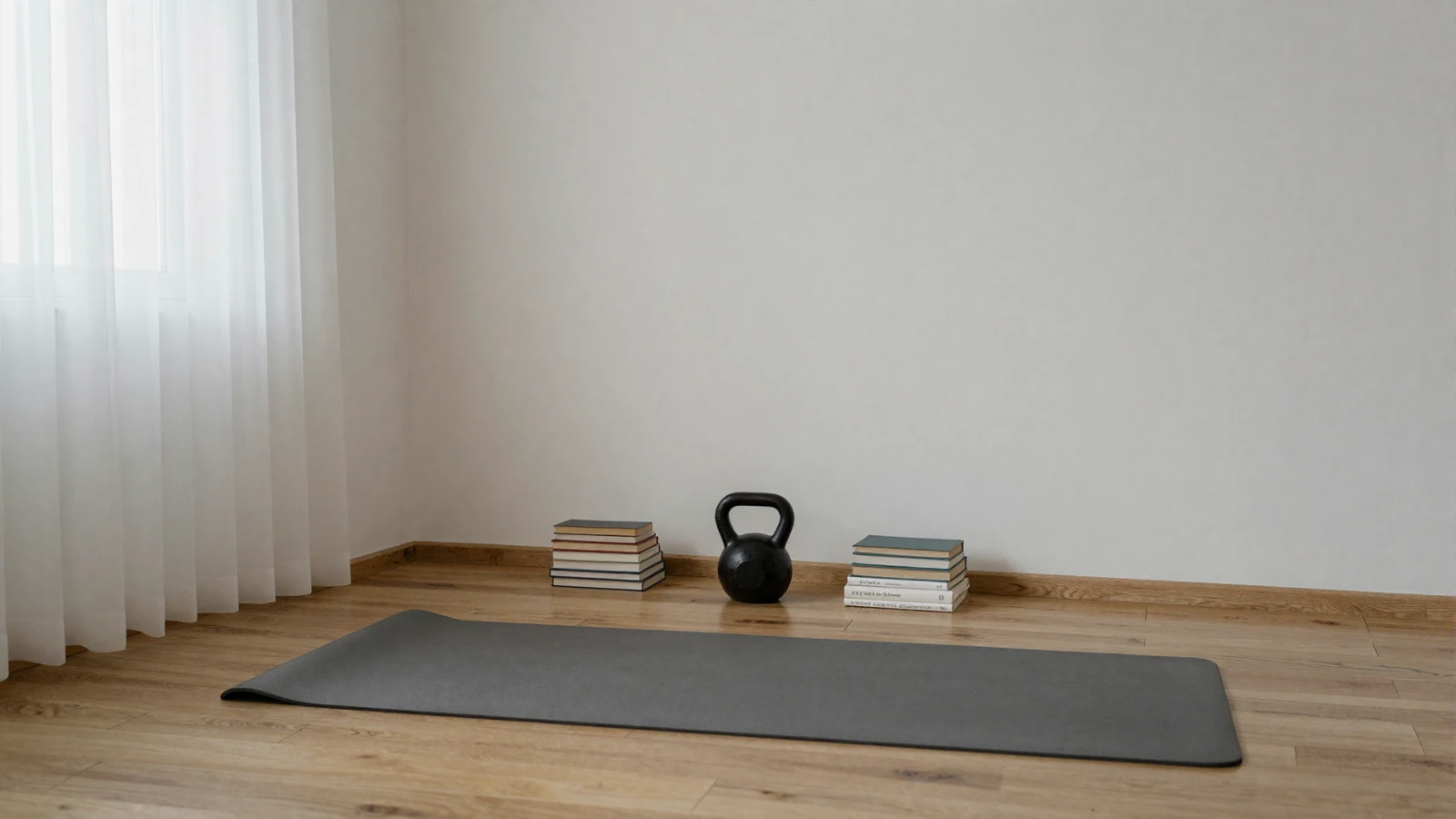
Quiet morning corner with a yoga mat and a single kettlebell - the small daily practice that underpins male body acceptance
The work happens in small, unglamorous rooms - not in before-and-after photos.

Three practices do the heavy lifting:

  • Mirror neutrality, not mirror love. Stand in front of the mirror for thirty seconds daily and name what you see factually - "dark hair, brown eyes, shoulders, scar on knee." No judgments, no compliments. Neutrality is the bridge out of shame.
  • Reduce comparison inputs. Audit the accounts you follow. If a feed leaves you feeling smaller, mute it for a month. The average man sees more curated male bodies in a day than his grandfather saw in a lifetime.
  • Train for how you want to feel, not how you want to look. Lift to feel strong. Run to feel clear. Stretch to feel open. Bodies built around sensations are more durable than bodies built around images.

For the specific population this platform serves, our Small Penis Men community is a calmer place to do this work - and the research on what partners actually prioritize is a useful antidote to the worst of the self-criticism.

The rewiring

Mindset Shifts That Change the Game

Three reframes that do more than any affirmation ever will. Read them slowly.

From "I need to be impressive" to "I need to be interested." The first keeps you performing. The second makes you someone worth talking to.

Shift One Attention outward, not inward

From "I have to get this right" to "I'm collecting data." Every awkward conversation becomes a rep instead of a verdict.

Shift Two Outcomes become experiments

From "What if they reject me?" to "What if we're just not a fit?" Rejection stops being a wound; it becomes information about compatibility.

Shift Three Reframing refusal

The bottom line: the men who read as confident aren't thinking about themselves more - they're thinking about themselves less. That's the unglamorous secret under every technique in this guide.

Bringing Confidence Into Dating

Dating is where the habits get tested. A man who has done even a month of real work shows up differently - he opens messages instead of over-drafting them, he can sit with silence on a date without filling it, and he hears "no" without spiraling.

A few field-tested principles:

  • Lead with curiosity. Ask one real question in the first five minutes of any conversation. Not a script - something you actually want to know.
  • Match energy, don't chase it. If she's leaning in, lean in. If she's distant, don't perform harder to close the gap. Calm men walk away from mismatches faster - which is itself attractive.
  • Tell on yourself early. Naming a small insecurity with a light touch ("I'm rusty at this, bear with me") disarms the room and reads as grounded, not needy.
  • Pace the physical. Confident men move a half-step slower than they think they should. It creates space for consent and chemistry to build at the same time.
  • Follow up cleanly. "I had a great time. Want to do Thursday?" beats three paragraphs of hedging, every time.

If the first date itself feels like the boss level, our guide on first date tips for shy men covers openers, body language, and the small rituals that settle a nervous system before the door opens.

People also ask

Related Questions

What builds a man's confidence?

A man's confidence is built the same way any skill is: through competence, consistency, and small repeated wins. Specifically, men who keep small promises to themselves daily - workouts done, commitments honored, hard conversations had - report the largest gains in trait confidence inside 60-90 days. Personality is a minor factor; training is the major one.

What are the 5 C's of confidence?

The 5 C's are Competence, Consistency, Composure, Courage, and Care. Competence is mastery in at least one lane. Consistency is keeping promises to yourself. Composure is steady breath and pace. Courage is moving while afraid. Care is attention outward - toward others and the moment. Together they form the behaviors that read as genuine, non-performative confidence.

What are the 4 C's of confidence?

Some coaching frameworks reduce the list to four: Competence, Confidence, Connection, and Character. Others use Clarity, Courage, Consistency, and Compassion. Both are valid simplifications of the same principle - confidence is a behavioral stack, not a mood. The 5 C's framework used here adds Composure as its own pillar because it's the signal others read first.

How long does it take to actually feel more confident?

Most men report meaningful shifts inside four to six weeks of consistent daily practice - morning movement, a reflection log, and one weekly hard conversation is a strong starter stack. Deeper body-image and mindset work typically takes three to six months. There is no shortcut, but the compounding is real and predictable.

Can you build confidence without the gym?

Yes. The gym is a useful vehicle because it creates weekly wins and a felt sense of strength, but the mechanism - repeated small promises kept - works with any domain. Cooking, music, writing, a sport, a craft, a language. The substance is deliberate practice plus honest self-review, not the specific activity.

Does male body acceptance mean giving up on changing your body?

No. Acceptance and improvement are compatible. Acceptance means you stop treating your current body as a problem to apologize for; improvement means you train because you respect the body, not because you hate it. The men with the most durable confidence usually hold both at once.

Build Confidence With the Community

Do the work alongside people who get it. Quiet, verified, judgment-free - and built around acceptance first.

Free to join · Private by default · Delete anytime.